Driving theory test — Zambia (2026): format, pass mark and free practice
What you need to know to pass the theory test (Zambia) the first time, plus 19 practice questions with answers.
Take the free testThe test
RTSA theory test: rules of the road, road signs and basic first aid.
25 questions. You need 19 correct answers to pass.
The exact format is not officially published: these figures are indicative, based on public information.
- Book your RTSA test online with confidence — know every sign before you go.
- Fail and you lose time re-booking your test.
Topics to revise
ITOZE’s 137 questions for this country cover:
- Road signs (44)
- Lanes and overtaking (16)
- Speed and distance (12)
- Junctions and roundabouts (12)
- Vehicle and seat belts (10)
- Alcohol and phones (9)
- Pedestrians (7)
- Licensing (6)
- Parking and reversing (6)
- Breakdowns and accidents (6)
- Lights and horn (5)
- Level crossings (4)
How to prepare
- Start with a test to see where you stand.
- Revise topic by topic, reading the explanation of every mistake.
- Take at least 3 full mock exams in the real format before the day.
Frequently asked questions
How many questions are in the theory test (Zambia)?
RTSA theory test: rules of the road, road signs and basic first aid. The exact format is not officially published: these figures are indicative, based on public information.
What score do you need to pass?
19 correct answers out of 25.
How can I practise for free?
On itoze.com/zm: 5 questions without signing up, then one full mock exam for free, in the real format and marked against the same pass mark.
How much does ITOZE cost?
3 days : 10 ZMW · 1 week : 20 ZMW · 1 month : 40 ZMW. Pay by mobile money: MTN, Airtel, Zamtel.
What if I fail my test?
With a 1-week or 1-month subscription and at least 3 mock exams taken on ITOZE, you get your money back on a photo of your result (terms: itoze.com/zm/guarantee).
Where do the questions come from?
Questions derived from the Zambian Highway Code (6th edition, Road Transport and Safety Agency) and the official SADC road signs.
19 practice questions with answers

1. What must you do at this sign?
- • Stop only if there is a stop line painted
- • Slow down and stop only if traffic is coming
- ✓ Stop completely, then go only when the road is clear
- • Give way, stopping only for heavy vehicles
Answer : You MUST stop at every junction with a STOP sign and only proceed when the road is clear.
Zambian Highway Code (6th ed., RTSA), Rule 218
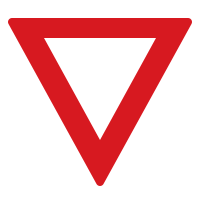
2. What does this sign tell you?
- ✓ Give way to traffic on the major road
- • Give way only to vehicles on your right
- • Stop completely even if the road is clear
- • Traffic on the major road must give way to you
Answer : At a GIVE WAY sign, slow down and be ready to stop to let traffic on the major road pass.
Zambian Highway Code (6th ed., RTSA), Rule 217
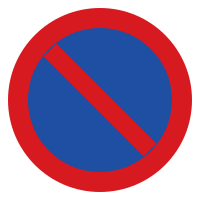
3. What does this sign mean?
- • No parking on the opposite side only
- • No stopping at all
- • Parking for permit holders only
- ✓ No parking
Answer : Blue circle, red border and one diagonal bar: no parking.
Zambian Highway Code (6th ed., RTSA), Rule 250
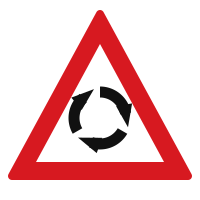
4. What does this warning sign mean?
- • Crossroads ahead
- ✓ Roundabout ahead
- • Mini-roundabout: go round clockwise now
- • Traffic circle closed: turn back
Answer : A roundabout is ahead: slow down, choose your lane early and give way to traffic on your right.
Zambian Highway Code (6th ed., RTSA), Rule 228
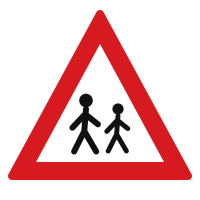
5. What does this sign warn of?
- ✓ Children, near a school
- • A pedestrian crossing ahead
- • A playground: no stopping
- • Elderly people crossing
Answer : Drive slowly near schools and watch out for children getting on or off school buses.
Zambian Highway Code (6th ed., RTSA), Rule 208
6. Before getting a provisional driving licence you must:
- • Show a certificate of good conduct
- • Complete a driving school course first
- • Pass the practical test first
- ✓ Get a medical report from a registered medical practitioner
Answer : A medical report is required before a provisional driving licence.
Zambian Highway Code (6th ed., RTSA), Rule 95
7. You need glasses to read a number plate at 20 m. You must:
- ✓ Wear them at all times while driving
- • Wear them only on highways
- • Wear them only at night
- • Keep them in the car in case police ask
Answer : If you need glasses to read a plate at 20 metres, you must wear them at all times while driving.
Zambian Highway Code (6th ed., RTSA), Rule 107
8. What is the legal blood alcohol limit for drivers in Zambia?
- • 100 mg per 100 ml of blood
- • 50 mg per 100 ml of blood
- ✓ 80 mg per 100 ml of blood
- • 120 mg per 100 ml of blood
Answer : You must not drive with a blood alcohol level of more than 80 mg/100 ml.
Zambian Highway Code (6th ed., RTSA), Rule 111
9. When may you use a hand-held phone while driving?
- • For short calls on a straight road
- • When stopped at traffic lights
- • When driving slowly in town
- ✓ Only to call 991 or 999 in an emergency when it is unsafe to stop
Answer : You must not use a hand-held phone while driving, except to call 991 or 999 in an emergency when it is unsafe to stop.
Zambian Highway Code (6th ed., RTSA), Rule 115
10. Who must wear a seat belt?
- • The driver only
- ✓ The driver always, and passengers
- • Everyone, except on short town trips
- • Front-seat occupants only
Answer : Seat belts must be fitted and always used, even on short trips; the driver must always wear one.
Zambian Highway Code (6th ed., RTSA), Rule 126
11. Where must a child under 10 years and under 1.5 m tall sit?
- • Anywhere, if the child sits still
- • In the front seat with a seat belt
- • On an adult’s lap with the adult belted
- ✓ In the rear seat, wearing a seat belt or child restraint
Answer : The driver must ensure such a child sits in the rear seat and wears a seat belt.
Zambian Highway Code (6th ed., RTSA), Rule 126
12. At 60 km/h on a dry road, the shortest overall stopping distance is about:
- • 54 metres
- • 21 metres
- ✓ 33 metres
- • 12 metres
Answer : At 60 km/h: thinking distance 12 m + braking distance 21 m = 33 m overall.
Zambian Highway Code (6th ed., RTSA), Rule 141
13. In Zambia you normally drive:
- • In the centre on two-lane roads
- • On the left, except on highways
- • On the right
- ✓ On the left
Answer : Keep to the left, except when overtaking, turning right or passing stationary vehicles.
Zambian Highway Code (6th ed., RTSA), Rule 174
14. On which side do you normally overtake?
- • On either side on dual carriageways
- ✓ On the right
- • On the left
- • On the left when the right lane is busy
Answer : Overtake only on the right, unless the driver in front has signalled to turn right.
Zambian Highway Code (6th ed., RTSA), Rule 164
15. At a roundabout, you normally give way to:
- • The larger vehicle
- • Traffic already in the roundabout on your left
- ✓ Traffic on your right
- • Traffic on your left
Answer : On reaching the roundabout, give way to traffic on your right unless markings indicate otherwise.
Zambian Highway Code (6th ed., RTSA), Rule 228
16. A pedestrian has stepped onto a crossing. You must:
- • Hoot and pass if there is room
- • Give way only to children
- • Pass behind them
- ✓ Give way
Answer : Give way once pedestrians have stepped on to a crossing.
Zambian Highway Code (6th ed., RTSA), Rule 198
17. When must you dip your headlights?
- • Never on highways
- • Only when another driver flashes you
- ✓ When meeting oncoming traffic or following another vehicle closely
- • Only in town
Answer : Keep headlights dipped when there is oncoming traffic, cyclists or pedestrians, or when following closely.
Zambian Highway Code (6th ed., RTSA), Rule 244
18. The red lights at a level crossing start flashing. You:
- • Cross quickly if no train is visible
- • Stop only if the barrier is down
- • Slow down and cross
- ✓ Stop and wait
Answer : When the red lights flash, you must stop and wait: a train will arrive soon.
Zambian Highway Code (6th ed., RTSA), Rule 258
19. After a breakdown on a straight road, place the warning triangle at least:
- • 5 metres behind your vehicle
- ✓ 50 metres behind your vehicle
- • 20 metres behind your vehicle
- • 100 metres behind your vehicle
Answer : Put a reflective warning triangle on a straight road at least 50 metres from your vehicle.
Zambian Highway Code (6th ed., RTSA), Rule 262